
Secret Messages

Secret Messages


She emptied her heart.

Wrote all her secrets on little

slips of paper and put them in

old glass bottles she found

buried in her garden.

She carried them, in a cardboard box,

to the sea where she set them free –

a flotilla of her deepest thoughts, her

fears, her longings. All the things she

could no longer hold. She waved goodbye

as they bobbed away with the tide and

made a wish that whoever finds them

will know what to do with them.


Writer’s Digest Wednesday Poetry Prompt 674 – write a secret poem
Cat Nap

Cat Nap


This poem would like to fold

itself up, like a napping cat,

curl its tail over its eyes,

block out the raucous world.

This poem is tired of scribbling

words of peace that don’t work –

lines of ink that fade before its eyes.


Quadrille #186 – Fold 

The Collector

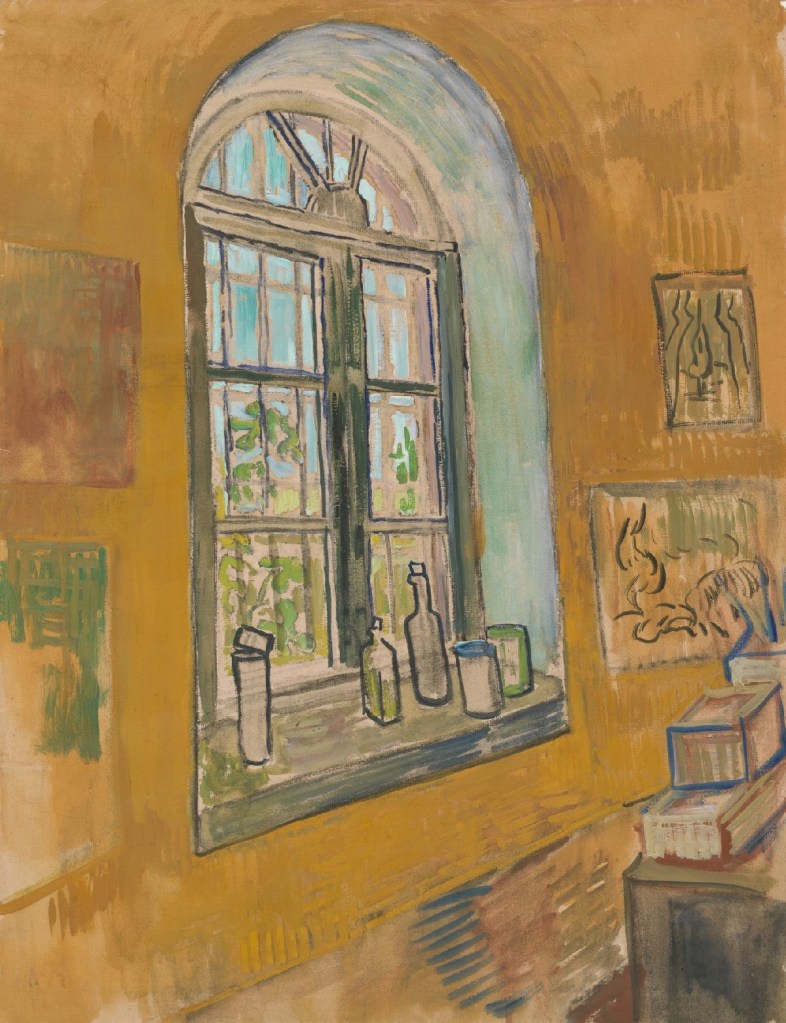
Vincent van Gogh, Window in the Studio (1889), chalk, brush and oil paint and watercolor on paper, © Van Gogh Museum, Amsterdam

The Collector


She collects old bottles that she

finds buried in her garden,

and places them on a windowsill.

When the sun shines in, her kitchen

is filled with a kaleidoscope of colors –

blues and greens and browns. Bottles

from old remedies for headaches and

stomach aches, laundry bleach, and ketchup.

Smooth bottles, square bottles, tiny bottles,

one that still has a piece of rotting cork

in its neck. Bottles that tell a story of hard work

and pain. She feels like an archeologist discovering

a lost way of life through the colored glass

detritus of another generation, and she wonders what

future generations will think of her when they

uncover the bits of her life left behind.


Haunted

Canned Memories

Canned Memories


The days have grown shorter and

there is a chill hovering around the

last of the Maple leaves, as they dangle

listlessly from the branches that nourished them

Thoughts turn to all things warm – sweaters and

blankets and soup. My freezer is stocked with

containers of tomato soup made from the

fruit of our garden. Ripened by the sun, picked

and peeled, chopped and simmered with garlic and

basil and onion – ready to warm the body when

Winter makes itself at home, here.

But the soup that warms my soul with memories

is the kind that came in a red and white can, the one

made famous by Andy Warhol.  The soup my mother

served for lunch with small round crackers and a

cup of hot chocolate.


Poetics: Time for Soup!

Five Ways to Cross a Lake

Five ways to Cross a Lake


1 sit on the edge of the old wooden dock

with your toes dangling in the water

until you feel nothing

but the ancient ice that

is slowly melting


2 let your eye find the red

eye of a loon as it glides past

as if pulled by a string –

hidden feet walking under

the choppy surface


3 cast your heart out as far as

 its tether allows and watch it sink

below the surface. Hold your breath

until it bobs back to the surface,

then slowly reel it in


4 put your thoughts on a leaf and let

them float away to become yellow hills

on the pebbled beach of your mind-

each one smoothed by the careless

touch of the waves


5 catch the wind as it pushes the water

to another time and place and then meet

it on the way back. Write it into a poem

that soars above the clouds and

touches down on some distant shore


MTB: Writing The Five Directions

The Quality of Dust

The Quality of Dust


The quality of dust is not measured in abundance,

but rather in the fineness of its particles.

True dust contains no lumps or identifiable

bits. It is silken to the touch and rises easily

on wisps of air.  True dust settles silently

atop flat surfaces and collects in corners without

fanfare. It is a magical powder that appears

just before visitors arrive to keep us humble

and grounded. True dust is ever present,

waiting patiently in mid air, hovering over

our busy lives, until it finds stillness. It can not

be caught or trapped, or tricked into vanishing.

True dust is the constant in this human-made world.


In the Beginning

In the Beginning


Sounds had no order, no form

Each note played randomly,

like early morning birdsong


Chaos was the melody that filled the air

Harmony, just an illusion, a vanishing act

performed by strumming magicians


Instruments rang out in unrhythmic time

and there was no key to unlock the secret

Until someone began to bang the drum –


and music was born


No Frog, No Sound

No Frog, No Sound


This poem is a shadow of

its former self, shedding syllables,

leaving a trail of letters behind

as

it

fades

Its feet leave no trace of rhythm

There are no stanzas left, no

couplets standing in the moonlight

It can no longer count to 5-7-5

All that remains is an old pond

Day 15 of PAD has us writing a shadow poem